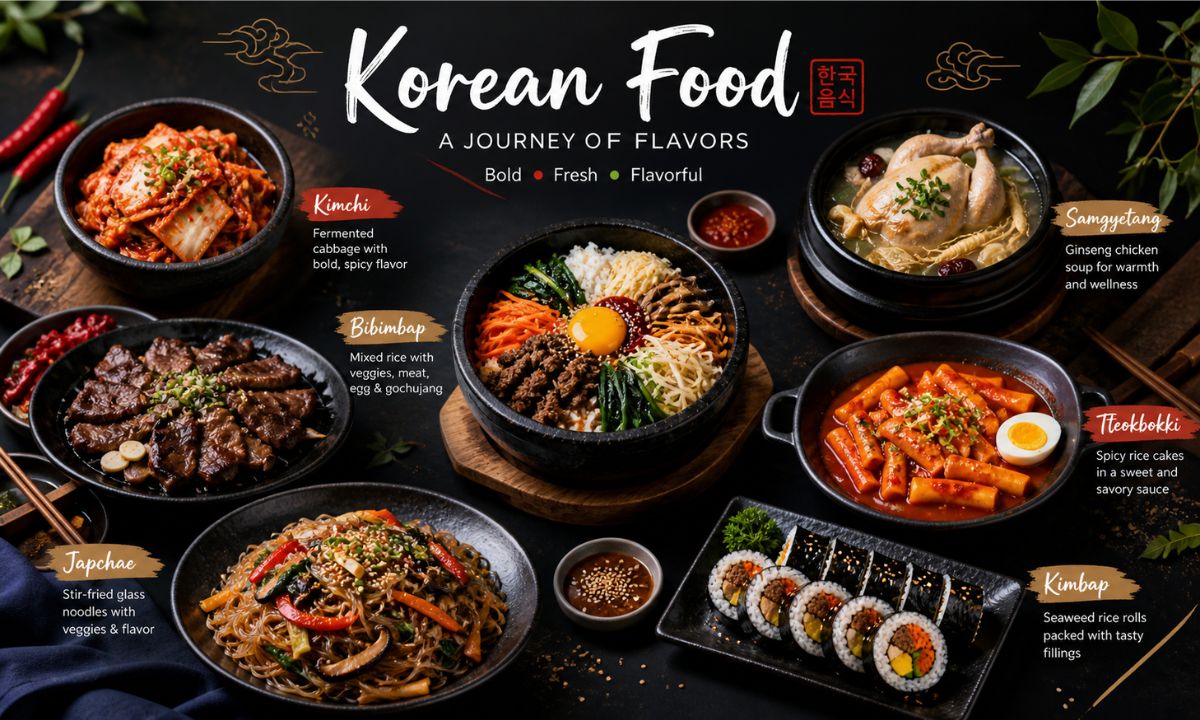
Korean Food Guide to Flavors, Dishes & Recipes
If you have ever searched for fast food open near me, chances are you were simply looking for something quick to eat, but maybe, just maybe, you also felt a small spark of curiosity to try something new. Today, exploring food from different parts of the world has become easier than ever, and it opens the door to exciting flavors and cultures you may have never experienced before. Among these, korean food has captured the hearts of people everywhere. Its rich, bold flavors, vibrant colors, and comforting yet healthy ingredients create an experience that goes beyond just eating. Every dish tells a story, and with each bite, you feel a connection to something warm, unique, and deeply satisfying.
What Is Korean Food?
Korean food comes from South Korea and reflects the country’s culture, climate, and long history. It focuses on balance, freshness, and strong flavors. Most meals include rice, vegetables, some type of protein, and several small side dishes. These side dishes are called banchan and are an important part of every meal.
People in Korea do not just eat to feel full. They eat to enjoy flavors and spend time together. Meals are often shared, which creates a warm and friendly environment.
History and Evolution of Korean Cuisine
Korean cuisine has developed over thousands of years. Early Korean people depended on farming and seasonal foods. Rice became the main food, while vegetables and herbs added flavor and nutrition.
Over time, different dynasties and cultural influences shaped the way food was prepared. The introduction of chili peppers in the 16th century changed Korean cooking forever. It added spice to many dishes and became a key part of the cuisine.
Even today, traditional cooking methods remain important. At the same time, modern ideas have also influenced food, making it more global and diverse.
Core Characteristics of Korean Food
One thing that makes Korean cuisine unique is its balance of flavors. A single meal can taste spicy, sour, salty, and slightly sweet at the same time. This balance makes the food exciting and enjoyable.
Another important feature is the use of fresh and natural ingredients. Korean cooking does not rely heavily on processed food. Instead, it uses vegetables, meats, and fermented items to create taste.
Texture also plays a big role. Some dishes are soft, others are crunchy, and some are chewy. This mix of textures makes every bite interesting.
Essential Ingredients Used in Korean Cooking
Many dishes share common ingredients that give Korean cuisine its identity.
| Ingredient | Description | Role in Korean Cooking |
| Rice | Main staple food | Served in almost every meal and forms the base of many dishes |
| Cabbage, Radish, Cucumber, Spinach | Common vegetables | Used fresh or fermented to add nutrition and texture |
| Garlic and Ginger | Aromatic ingredients | Add strong flavor and depth to dishes |
| Sesame Oil | Nutty flavored oil | Enhances taste and gives a rich aroma |
| Soy Sauce | Salty liquid seasoning | Adds saltiness and umami flavor |
| Gochujang (Chili Paste) | Spicy fermented paste | Provides heat and deep, bold flavor |
| Doenjang (Soybean Paste) | Fermented paste | Used in soups and stews for strong, savory taste |
These ingredients work together to create Korean dishes that feel both simple and rich, offering a perfect balance of flavor and nutrition.
Popular Korean Dishes Around the World
Korean cuisine has introduced the world to many delicious and unique dishes. Each dish carries its own flavor, story, and cultural value. Below, you will find some of the most popular Korean dishes explained in a simple and engaging way.
Kimchi
Kimchi is one of the most iconic dishes from South Korea. It is a fermented vegetable dish that people enjoy daily. Its bold flavor and health benefits make it loved around the world.
| Feature | Details |
| Main Ingredient | Cabbage (sometimes radish) |
| Flavor | Spicy, sour, tangy |
| Key Benefit | Rich in probiotics, good for digestion |
| Serving Style | Served as a side dish with most meals |
How to Make Kimchi at Home
Here is a simple and easy-to-follow method to make kimchi at home, explained in points:
- Start by cutting fresh cabbage into large pieces and soaking it in salted water for a few hours until it becomes soft. This step helps the cabbage absorb flavor later.
- Rinse the cabbage well with clean water to remove excess salt, then drain it properly so it is not too watery.
- In a separate bowl, prepare the seasoning by mixing garlic, ginger, chili flakes, a little sugar, and fish sauce or soy sauce. This mixture gives kimchi its spicy and rich taste.
- Add vegetables like radish or green onions to the seasoning for extra texture and flavor.
- Now, gently rub the spice mixture into the cabbage pieces, making sure every part is well coated.
- Place the coated cabbage into a clean jar or container and press it down tightly to remove air gaps.
- Leave the jar at room temperature for 1 to 2 days to start the fermentation process, then move it to the refrigerator.
- After a few days, your kimchi will develop its classic tangy and spicy flavor and will be ready to enjoy.
Bibimbap
Bibimbap is a colorful and healthy dish that looks as good as it tastes. It brings together rice, vegetables, meat, and egg in one bowl, creating a perfect balance.
| Feature | Details |
| Main Ingredient | Rice with mixed vegetables and meat |
| Flavor | Balanced, slightly spicy with sauce |
| Key Benefit | Nutritious and well-balanced meal |
| Serving Style | Mixed together before eating |
How to Make Bibimbap at Home
- Start by cooking fresh white rice and set it aside while you prepare the toppings. Warm rice works best for this dish.
- Prepare a variety of vegetables such as carrots, spinach, mushrooms, and cucumber. Slice them into thin pieces for easy mixing.
- Lightly cook each vegetable separately in a pan with a little oil and salt to keep its natural taste and color.
- Cook your choice of protein, such as beef, chicken, or tofu, with soy sauce and garlic for added flavor.
- Fry an egg separately until the yolk is slightly runny, as it adds richness to the dish.
- In a bowl, place the cooked rice as the base, then arrange the vegetables and protein neatly on top.
- Add a spoon of chili paste (gochujang) in the center to give the dish its signature spicy flavor.
- Finally, mix everything together before eating so all the flavors blend into a delicious and balanced meal.
Korean BBQ (Bulgogi & Samgyeopsal)
Korean BBQ is more than just food—it is an experience. People cook meat at the table and enjoy it fresh with sauces and wraps.
| Feature | Details |
| Main Ingredient | Beef (bulgogi) or pork belly (samgyeopsal) |
| Flavor | Smoky, savory, juicy |
| Key Benefit | Interactive and social dining |
| Serving Style | Grilled at the table and wrapped in lettuce |
How to Make Korean BBQ at Home
- Start by choosing good-quality meat such as thinly sliced beef or pork belly. Fresh meat will give the best flavor and texture.
- If you are using beef (like bulgogi), marinate it with soy sauce, garlic, sugar, sesame oil, and a little pepper. Let it sit for at least 30 minutes so it absorbs the flavor.
- Prepare side items like lettuce leaves, sliced garlic, green chilies, and dipping sauces. These will be used to wrap and enjoy the meat.
- Heat a grill pan or frying pan on medium-high heat. You can also use an outdoor grill if available.
- Place the meat on the hot pan and cook it until it is nicely browned and fully cooked. Turn it occasionally for even cooking.
- Once cooked, take a piece of lettuce, add the grilled meat, and top it with garlic or sauce. Then wrap it into a small bite.
- Eat it in one bite to enjoy the full mix of flavors, just like traditional Korean BBQ style.
- Continue grilling and eating in small portions to enjoy a fresh and interactive meal experience.
Tteokbokki
Tteokbokki is a favorite street food that many people enjoy for its bold and spicy taste. It is simple but very satisfying.
| Feature | Details |
| Main Ingredient | Rice cakes |
| Flavor | Spicy and slightly sweet |
| Key Benefit | Quick and comforting snack |
| Serving Style | Served hot in spicy sauce |
How to Make Tteokbokki at Home
- Start by soaking the rice cakes in warm water for about 10–15 minutes if they are hard. This will make them soft and ready to cook.
- In a pan, add water along with anchovy broth or plain water and bring it to a gentle boil. This forms the base of the sauce.
- Add Korean chili paste (gochujang), a little sugar, soy sauce, and chili flakes. Stir well until the sauce becomes smooth and slightly thick.
- Put the soaked rice cakes into the pan and let them cook in the sauce. Stir gently so they do not stick together.
- Add fish cakes (if available) and sliced onions or green onions to enhance the flavor and texture.
- Let everything simmer for a few minutes until the rice cakes become soft, chewy, and fully coated with the spicy sauce.
- Taste the sauce and adjust the sweetness or spice according to your preference.
- Serve hot and enjoy this delicious, spicy, and slightly sweet Korean street food at home.
Japchae
Japchae is a noodle dish that offers a unique texture and flavor. It is often served during celebrations and special occasions.
| Feature | Details |
| Main Ingredient | Sweet potato glass noodles |
| Flavor | Sweet and savory |
| Key Benefit | Light yet filling |
| Serving Style | Stir-fried with vegetables and sometimes meat |
How to Make Japchae at Home
- Start by soaking sweet potato glass noodles in warm water for about 20–30 minutes until they become soft and flexible.
- Boil the noodles for a few minutes, then drain and rinse them with cold water. Cut them slightly if they are too long.
- Prepare vegetables like carrots, spinach, onions, and mushrooms by slicing them into thin strips. This helps them cook evenly.
- Lightly cook each vegetable separately in a pan with a little oil and a pinch of salt to keep their natural taste and color.
- Cook your choice of protein, such as thin slices of beef or tofu, with soy sauce and garlic for added flavor.
- In a large pan, add the cooked noodles and mix them with soy sauce, a little sugar, sesame oil, and garlic. Stir well so the noodles absorb the flavor.
- Add all the cooked vegetables and protein into the noodles and mix everything together gently.
- Sprinkle sesame seeds on top and serve warm or at room temperature for a sweet and savory Korean noodle dish.
Samgyetang
Samgyetang is a traditional soup that people eat for health and energy. It is especially popular during hot weather in Korea.
| Feature | Details |
| Main Ingredient | Whole chicken with herbs |
| Flavor | Mild and comforting |
| Key Benefit | Boosts energy and health |
| Serving Style | Served hot as a soup |
How to Make Samgyetang at Home
- Start by cleaning a small whole chicken properly and removing any extra fat. This helps keep the soup light and clear.
- Soak glutinous rice in water for about 1 hour, so it becomes soft and cooks easily.
- Stuff the chicken with the soaked rice, garlic cloves, jujube (red dates), and ginseng if available. These ingredients give the soup its traditional flavor and health benefits.
- Place the stuffed chicken into a large pot and add enough water to fully cover it.
- Bring the water to a boil, then reduce the heat and let it simmer slowly for about 1 to 1.5 hours until the chicken becomes very tender.
- Skim off any foam from the top while cooking to keep the broth clean and clear.
- Add salt and a little pepper to taste, keeping the seasoning simple so the natural flavors stand out.
- Serve hot, often with a small side of salt or dipping sauce, and enjoy this warm, comforting, and nourishing Korean soup.
Kimbap
Kimbap is a simple yet tasty dish that is perfect for quick meals or picnics. It is easy to eat and full of flavor.
| Feature | Details |
| Main Ingredient | Rice and fillings wrapped in seaweed |
| Flavor | Light, fresh, slightly savory |
| Key Benefit | Convenient and portable |
| Serving Style | Cut into bite-sized rolls |
How to Make Kimbap at Home
- Start by cooking short-grain rice and let it cool slightly. Mix it with a little salt and sesame oil to give it a light flavor.
- Prepare fillings like thin strips of carrot, cucumber, spinach, egg omelet, and cooked meat or imitation crab. Slice everything evenly for easy rolling.
- Lightly cook the vegetables in a pan with a bit of oil and salt to enhance their taste while keeping them fresh.
- Place a sheet of dried seaweed (gim) on a bamboo mat or clean surface, then spread a thin layer of rice evenly over it.
- Arrange the prepared fillings in a line across the center of the rice.
- Carefully roll the seaweed using the mat, pressing gently to keep the roll tight and firm.
- Once rolled, brush a little sesame oil on the outside for extra flavor and shine.
- Slice the roll into bite-sized pieces and serve fresh as a light, tasty, and easy Korean meal or snack.
These dishes show how Korean cuisine offers something for everyone. From spicy snacks to healthy meals, each dish brings a unique taste and experience that people around the world continue to enjoy.
Health Benefits of Korean Food
Many people choose korean food because it supports a healthy lifestyle. It includes a lot of vegetables, which provide vitamins and minerals. The use of lean meat and seafood adds protein without too much fat.
Fermented foods are a major part of Korean meals. These foods help digestion and improve gut health. They also contain good bacteria that support the immune system.
Meals are usually well-balanced. Instead of eating one large dish, people enjoy several small dishes. This helps control portions and encourages variety.
The Importance of Fermentation
Fermentation is one of the most important parts of Korean cooking. It is a natural process that changes the taste and texture of food. Kimchi and soybean paste are great examples.
This process not only improves flavor but also increases nutritional value. Fermented foods can last longer without artificial preservatives. They also develop deep, rich tastes that fresh ingredients alone cannot provide.
Fermentation shows how traditional methods can still be useful in modern cooking.
Korean Street Food Culture
Street food is an exciting part of Korean life. In busy cities, you can find vendors selling fresh and hot snacks. These foods are quick, affordable, and full of flavor.
Tteokbokki is one of the most popular street foods. It is spicy and chewy, making it a favorite for many people. Hotteok, a sweet pancake filled with sugar and nuts, is another popular choice.
Fish cakes, fried snacks, and noodles are also common. Street food gives people a chance to enjoy delicious meals without spending too much money.
Dining Style and Food Culture
Eating in Korea is about more than just food. It is about respect and togetherness. People often eat in groups and share dishes placed in the center of the table.
There are also certain rules. For example, younger people usually wait for the elders to start eating. This shows respect and good manners.
Using chopsticks and spoons is common. The spoon is used for rice and soup, while chopsticks are used for side dishes.
This style of dining creates a sense of community and makes meals more enjoyable.
Conclusion
Korean food is more than just a type of cuisine. It is a reflection of history, culture, and tradition. From its balanced flavors to its healthy ingredients, it offers a unique and enjoyable experience.
Whether you try it at a restaurant or cook it at home, Korean cuisine gives you a chance to explore new tastes and traditions. Its growing popularity shows that people around the world appreciate its value.
In the end, food is not just about eating. It is about connection, learning, and enjoyment. Korean cuisine brings all of these together in a simple yet powerful way.





One Comment